Madrid is easy to like, but settling in takes more than finding a nice flat. Where you live shapes your daily routine, and a handful of administrative steps, done in a sensible order, decide how smoothly everything else works. This guide gives a fair overview of popular areas for newcomers, then walks through your first paperwork steps.
Key points
- Madrid is divided into 21 districts; well-known names such as Malasaña or Lavapiés are neighbourhoods inside them.
- No area is “best”. Match the neighbourhood to your routine: work location, budget, noise tolerance and whether you have children.
- The usual order is: identification (NIE, EU registration certificate or TIE), padrón, Social Security number, bank account, health card.
- The public transport card is personal and needs, among other things, a padrón certificate.
- Requirements change and differ by nationality and situation, so always check the current official page before you go.
Choosing where to live in Madrid
According to the city council, Madrid has 21 districts. Some of the names people use every day, such as Malasaña, Lavapiés or La Latina, are neighbourhoods (barrios) within the central district, Centro. The notes below are general impressions, not rankings or statistics, and every street within a neighbourhood can feel different. Visit at different times of day before you commit.
Malasaña
Lively, creative and full of bars, cafés and small shops. It suits people who want to be in the middle of things and are comfortable with evening noise. Flats tend to be older, and light and soundproofing vary a lot from building to building.
Chamberí
A residential district with a settled, local feel, plenty of everyday shops and a good mix of ages. It suits people who want city life without the constant buzz of the very centre, including couples and families.
Salamanca
Elegant, orderly and known for upmarket shopping streets and wide avenues. It suits those who value a polished, quiet setting and are happy to pay for it. It can feel formal if you prefer a bohemian atmosphere.
Lavapiés
One of the most multicultural parts of the centre, with a strong community and arts scene and a busy street life. It suits open-minded, sociable people who like variety. Expect a lively, sometimes rough-around-the-edges character, so walk the area before deciding.
La Latina
Narrow historic streets, terraces and tapas bars, especially busy at weekends. It suits people who want old Madrid on their doorstep. Note that “La Latina” the neighbourhood is not the same as the separate district called Latina.
Retiro
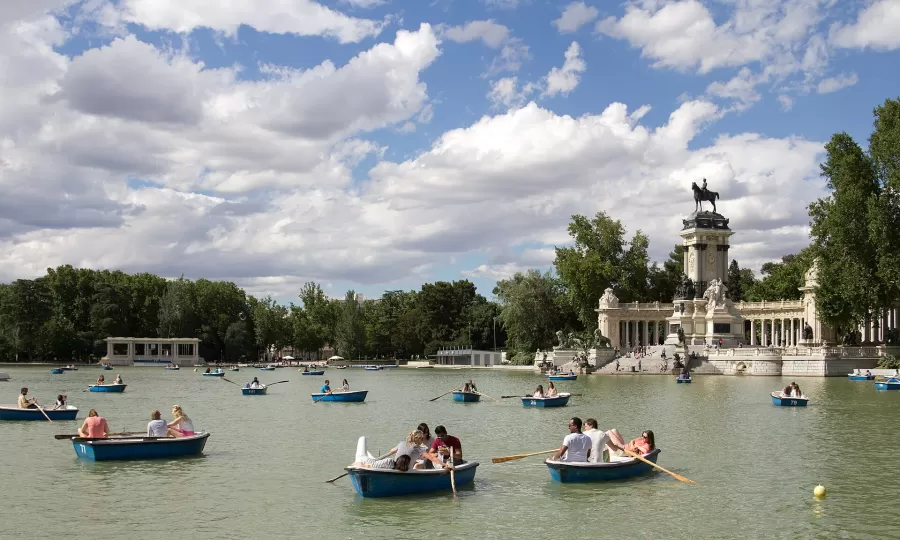
Centred on the large Retiro Park, this area is calmer and green, and popular with families and anyone who values open space close to the centre.
Chamartín
A quieter, mostly residential district in the north with a business-oriented side. It can suit professionals working nearby and families who prefer calm streets over nightlife.
Arganzuela and Madrid Río
Arganzuela borders the Madrid Río riverside park, which offers paths, play areas and space for running and cycling. It appeals to people who want green space and a more relaxed pace while staying well connected.
Practical notes: getting around and renting
Metro and public transport
Madrid has an extensive Metro network, backed by suburban trains and buses, so you can live comfortably without a car. When comparing flats, check the walking distance to the nearest Metro station and how many changes your regular journey needs. Timetables, lines and fares change, so check the official operators before relying on a particular route.
The Tarjeta Transporte Público
Public transport in the region is coordinated by the Consorcio Regional de Transportes de Madrid (CRTM). Monthly and annual passes are loaded onto the personal Tarjeta Transporte Público. According to the CRTM, you apply online, where the card is delivered to your home in around a week, or by appointment at a management office, where you leave with the card the same day. You need a recent passport-style photo, an identity document (DNI, passport or residence permit) and a certificate of padrón issued within the previous three months; if you are registered in the Comunidad de Madrid you can authorise an electronic check instead of bringing paper. The first issue costs 4 euros (2026). Passes are then bought at authorised points of sale or in the CRTM apps. Because the padrón certificate is part of the process, do your empadronamiento first.
Renting: the basics
Without quoting prices, which change constantly, a few general habits help. Get everything in writing, read the contract carefully before paying anything, and check who the landlord really is. Ask what is included in the rent and what you will pay separately for utilities. Keep copies of the contract, any deposit receipt and the inventory. Importantly for your paperwork, ask early whether the landlord will let you register at the address, because the padrón requires documents showing you have the right to use the home. If a flat will not allow registration, that is a serious practical problem.
Your first paperwork steps, in order
The exact order depends on your nationality and your situation (employee, self-employed, student, family member). What follows is the sequence that works in most cases. Some steps overlap, and some offices ask for documents in a different order, so treat it as a map, not a rulebook.
1. Identification: NIE, EU registration certificate or TIE
Almost everything else depends on having a Spanish foreigner identity number. Many newcomers start with the NIE number, the personal identification number used for banks, contracts and administrative procedures. EU citizens who plan to stay normally also need the EU registration certificate, while non-EU nationals with a residence authorisation receive the TIE card, a physical card with fingerprints taken at a police appointment. These processes have deadlines counted from your arrival or from the grant of your authorisation, so check the current rules on the official police and immigration pages and do not leave them too long.
2. Empadronamiento (the padrón)
Registering where you live is the document that unlocks many others. In Madrid city, padrón procedures are handled at the citizen service offices (Oficinas de Atención a la Ciudadanía) by appointment, and the city limits you to one appointment every 30 days per person. For a new registration you typically need the signed application form from each adult, valid identity documents and documents proving you can use the home. Our guide to empadronamiento in Madrid explains the process in more detail. Non-EU nationals without permanent residence must periodically renew their registration, and the council sends a letter when it is due.
3. Social Security number
Anyone who starts working, or who needs access to the public health system, needs a Social Security number. If you have never had one, you can request it through the Seguridad Social online portal with an electronic identification method, or without one by submitting your details with a selfie and a photo of your ID document. You will need your DNI or NIE, mobile phone, email and address, and the portal recommends completing form TA.1 beforehand. Read more in our guide to the Social Security number. Check first whether you already have one from earlier work in Spain, because you should not end up with two.
4. Bank account
A Spanish account makes salary, rent and direct debits much easier. Requirements and charges vary from bank to bank and change over time: some banks open non-resident accounts with a passport, while others ask for a NIE, proof of address or proof of income or activity. There is no single rule, so ask two or three banks what they require and what they charge before choosing.
5. Healthcare card (tarjeta sanitaria)
The tarjeta sanitaria of the Madrid regional health service (SERMAS) is issued to residents of the Comunidad de Madrid whom the Social Security recognises as insured persons or beneficiaries. According to the Comunidad de Madrid, you apply in person at the health centre assigned to your home address, bringing a valid identity document (a TIE for foreigners), a padrón certificate issued within the last 90 days (residents of Madrid city can authorise the centre to check it) and the Social Security document proving your right to healthcare, which can also be checked by the centre if you authorise it. At the time of checking, the online application was temporarily suspended. The card is collected in person at the health centre. People without legal residence have a different route, through a document called the DASE.
6. Autónomo registration, if you work for yourself
If you will work on your own account, you must register in the Social Security’s special regime for self-employed workers. The Seguridad Social provides an online service for this, which is available to individuals who identify themselves electronically. You will also have to be registered for tax purposes, and your right to work as a self-employed person depends on your residence status, so confirm this before you start trading. Our page on autónomo registration in Madrid covers the steps.
Where we can help
These procedures involve appointments, forms and electronic identification that can be frustrating if you are new to the system. We work online, with no office in Madrid, and help foreigners prepare and complete paperwork remotely. You can see everything we offer on our services page, or contact us by phone on +34 673 374 567 to tell us your situation and ask which steps apply to you.
Frequently asked questions
Which neighbourhood is best for a newcomer?
There is no single best area. Central neighbourhoods such as Malasaña, Lavapiés and La Latina are lively and convenient but can be noisy. Chamberí, Retiro, Chamartín and Arganzuela tend to be calmer and more residential. Choose according to where you work, your tolerance for noise and your daily habits, and visit at different times before signing.
Should I register on the padrón before opening a bank account?
There is no single rule. The padrón is needed for the transport card and the health card, so do it early. Banks vary in what they ask for, so check with the bank you choose. Your identity document and NIE are usually the first things they will want.
Can I get a health card straight after arriving?
Not immediately. According to the Comunidad de Madrid, the card is for residents recognised as insured or beneficiaries by the Social Security, and you need a padrón certificate and valid identification. In practice, the earlier you complete identification, padrón and your Social Security number, the sooner you can apply at your health centre.
Sources
- Distritos y sus competencias (Ayuntamiento de Madrid), checked 21 October 2026
- Trámites de Padrón y censo electoral con cita previa (Ayuntamiento de Madrid), checked 21 October 2026
- Tarjeta Transporte Público Personal (Consorcio Regional de Transportes de Madrid), checked 21 October 2026
- Tarjeta sanitaria (Comunidad de Madrid), checked 21 October 2026
- Solicitar el Número de la Seguridad Social (Seguridad Social, Importass), checked 21 October 2026
- Alta en trabajo autónomo (Sede Electrónica de la Seguridad Social), checked 21 October 2026
Want us to handle it for you?
Tell us your situation and get a fixed quote in writing before you pay anything.